

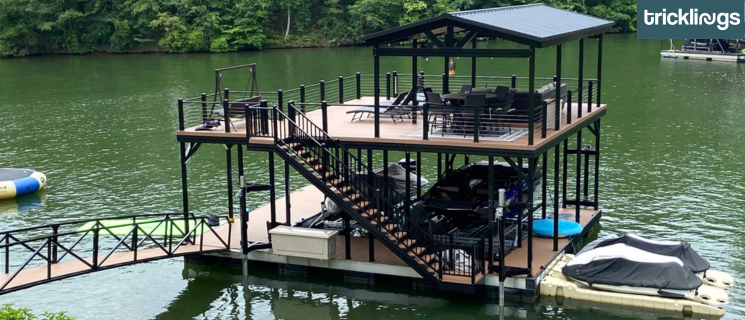
A steep shoreline can turn a simple dock project into a design problem. The drop from yard to water may be sharp, access can be awkward, and the lake or river may deepen quickly near shore. Aluminum docks can work well in these settings because they can be configured with lighter structural components, long gangways, and floating or fixed sections that suit changing elevations.
The Unique Challenges of Engineering Docks for Steep Shorelines
The first issue is the vertical drop. A dock may sit well below the yard or home, so the path to the water needs to be planned as carefully as the dock itself. Soil stability, rock outcrops, drainage, and seasonal water changes can all affect where the system should begin.
A boat dock builder also has to think about how materials and equipment will reach the site. On a sharp slope, staging space may be limited, and heavy machinery may not have a clear route to the water.
Why Marine-Grade Aluminum is Optimal for High-Elevation Access
Aluminum is useful on steep sites because it provides good structural strength without the weight of many heavier materials. That can make sections easier to handle during fabrication and installation, especially where components need to be moved down a slope or across narrow access paths.
It also does not rot like untreated wood framing. Buyers comparing aluminum docks should still examine weld quality, bracing, decking, and hardware because the material alone does not determine the quality of the finished system.
Specialized Gangways and Staircases for Steep Elevation Drops
Gangways often do most of the work between the property and the water. On a steep bank, a longer span can reduce the walking angle and create a more comfortable transition to the dock.
Some properties may also need stairs before the gangway begins. Handrails, landings, and slip-resistant surfaces become especially important where elevation changes are significant. Floating dock builders should look at the full route from the upper property to the dock rather than treating shoreline access as a separate detail.
Cantilever vs. Floating Aluminum Systems on Sharp Inclines
A cantilevered or fixed approach may make sense where the bank is stable and the water level is fairly predictable. These systems can create a direct path from higher ground without relying on a floating section close to shore.
An aluminum floating dock can be a better fit where water levels change or the bottom drops away quickly. The floating portion rises and falls with the water while a gangway handles the difference in elevation. The better option depends on shoreline shape, depth, exposure, and how the property will be used.
Engineering Foundations and Hillside Anchoring Methods
Steep terrain puts added importance on the points where the dock system meets land. Foundations, landing pads, or structural supports may need to resist both downward loads and forces pulling toward the water.
Anchoring in the water also needs to match depth and bottom conditions. Rock, mud, or sand can each require a different approach. A professional boat dock builder should evaluate hillside support and water-side anchoring as one connected system rather than two unrelated tasks.
Safety Enhancements for High-Angle Shoreline Access
Steep access routes leave less room for mistakes. Railings, well-placed steps, secure transitions, and clear walking paths can make a major difference in daily use. Lighting may also help where owners return to shore after dark.
Dock layout should keep boarding areas free of clutter. Ladders, storage boxes, seating, and mooring hardware need to be placed so they do not interfere with the main route between the gangway and the boat.
Key Maintenance Considerations for Steep Terrain Dock Systems
Maintenance can be more difficult on a steep shoreline simply because reaching the dock takes more effort. Hinges, fasteners, gangway connections, anchors, and handrails should be easy to inspect without requiring awkward access.
Drainage around the upper landing also deserves attention. Runoff can erode soil, expose supports, or make stairs slippery if water is allowed to collect along the access path. Periodic checks after heavy rain or major water-level changes can catch those issues early.
For steep properties, the most successful dock projects usually come from treating access, structure, anchoring, and shoreline conditions as one design problem. Flotation Systems Inc. can support that kind of planning with residential and commercial all-aluminum dock systems, along with anchoring solutions, decking, ramps, gangways, and custom dock configurations suited to different waterfront layouts.
