

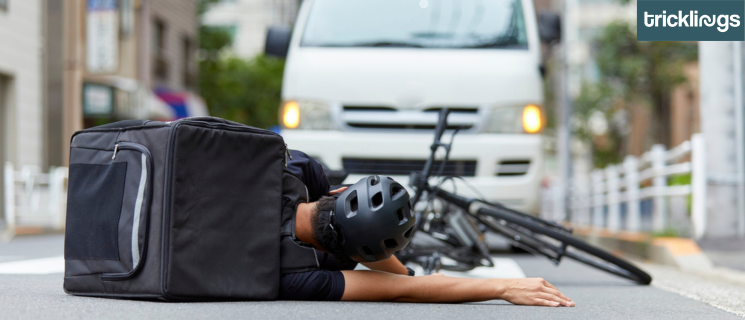
City streets place cyclists close to moving vehicles, parked cars, pedestrians, and uneven pavement, often with little room for error. A bicycle accident may happen in seconds, yet the injuries can affect work, mobility, and daily routines for months. Understanding how urban collisions occur helps explain why certain road conditions and driving habits repeatedly lead to serious harm.
Left-Turn Drivers Often Misjudge an Approaching Cyclist’s Speed
Drivers turning left across traffic may see a bicycle but underestimate how quickly it is approaching. Smaller objects can appear farther away than they are, especially at dusk, in rain, or along roads crowded with signs and storefronts. A rider traveling straight through an intersection may have no safe path once a vehicle begins crossing the bike lane.
Impact commonly throws the cyclist over the handlebars or onto the side of the turning vehicle. Head injuries, shoulder fractures, wrist damage, and deep road rash often follow because the rider has little time to brake or prepare for the fall.
What Makes Right-Turn Collisions So Dangerous?
Right-turn crashes often occur when a driver passes a cyclist and then turns across the rider’s path. Known as a right hook, this type of bike accident can trap the bicycle between the vehicle and the curb. Mirrors may not show a cyclist positioned beside the rear passenger door, particularly on buses, vans, and trucks.
Blind spots grow larger as vehicles increase in length and height. Riders can remain visible moments earlier, then disappear from the driver’s view as traffic slows near a junction.
Street design may add to the danger by placing a marked bicycle lane directly beside a turning lane. Confusing markings, faded paint, and short merge areas force cyclists and motorists into the same space without enough time to react.
Parked Cars Create a Hidden Door Zone
A driver or passenger may open a door into the path of an approaching bicycle without checking behind. Door strikes can send a cyclist into moving traffic, while a sudden attempt to avoid the door may cause a second collision with another vehicle.
Narrow streets make these incidents harder to prevent because riders cannot always leave enough space beside parked cars. Facial injuries, broken collarbones, hand fractures, and dental damage frequently result when the upper body hits the door or pavement.
Distracted Driving Delays the Reaction That Could Prevent a Crash
Phones draw attention away from mirrors, signals, and changing traffic conditions. Even a brief glance at a message can prevent a motorist from noticing a cyclist entering an intersection or slowing ahead.
Navigation screens, food, passengers, and vehicle controls create similar problems. Urban roads demand constant observation because bicycles can move between visible and hidden positions within seconds.
Delayed braking often increases the force of impact. A driver who reacts late may strike the bicycle at full speed rather than slowing enough to reduce the severity of the bicycle crash.
Rough Pavement Can Turn a Routine Ride Into a Sudden Fall
Potholes, broken asphalt, loose gravel, sunken utility covers, and raised pavement edges can catch a narrow bicycle tire. Riders may lose control, flip forward, or veer into an adjacent traffic lane while trying to avoid the defect.
Construction zones present added hazards when crews leave steel plates, uneven transitions, debris, or unclear detours in active travel areas. Poor lighting makes these conditions even more difficult to see before the cyclist reaches them.
Large Vehicles Leave Little Room for Recovery
Trucks and buses require more space to stop and turn than passenger cars. Their rear wheels may track closer to the curb during a turn, placing a nearby cyclist at risk even when the front of the vehicle appears to pass safely.
Air movement from a fast-moving truck can also affect bicycle stability. A cyclist may be pulled toward the vehicle or pushed toward the road edge, especially on narrow bridges and streets without protected lanes.
Severe injuries are more likely because larger vehicles weigh far more than bicycles and riders. Crushing trauma, spinal damage, multiple fractures, and internal injuries can occur even at relatively low urban speeds.
Faded Markings and Poorly Timed Signals Cause Confusion
Worn lane lines can leave drivers unsure where bicycle space begins, while missing signs may fail to warn motorists about a crossing ahead. Intersections become more hazardous when traffic signals provide cyclists only a short window to clear several lanes.
Signal timing can also place turning traffic and cyclists in conflict at the same moment. Riders may enter on a green light while drivers receive permission to turn across the same route.
Speeding Makes Urban Bicycle Injuries Far More Severe
Higher speed reduces the time available to see a cyclist, judge distance, and stop safely. A few extra miles per hour can sharply increase impact force, turning an otherwise avoidable bike accident into a life-changing event.
Residential streets and business districts may appear safe because posted limits are low. Traffic congestion, however, can encourage drivers to accelerate through open gaps without checking crosswalks, driveways, or bicycle lanes.
Legal review may help determine whether speeding, distraction, road design, or another factor caused the collision. The Lackey Law Firm assists injured cyclists by examining crash reports, medical records, photographs, witness accounts, and available video to build a bicycle accident claim that reflects both the cause of the incident and its effect on the rider’s life.
