

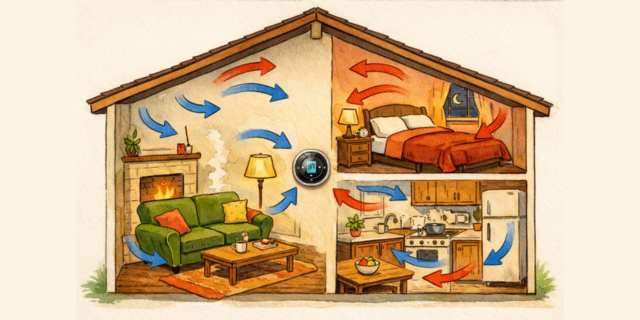
Maintaining a comfortable indoor atmosphere year-round is more achievable than ever before, thanks to advancements in home climate control technology. Modern solutions help ensure you and your family remain comfortable year-round, while maximizing energy efficiency. For homeowners looking to explore their options, a variety of innovative products and systems are now available, making it easy to implement tailored climate-control strategies. As you begin considering your choices, you might also want to check out https://www.mrcool.com/ for reliable, efficient home climate solutions.
Understanding how these technologies integrate and complement one another can enable seamless temperature and air-quality management, elevating overall home functionality. Whether you are renovating an existing home or designing a new one, integrating the right combination of devices can enhance comfort, minimize energy usage, and add value to your property.
In this guide, you will discover key home climate-control solutions and learn how to leverage them for optimal results. From smart thermostats that learn your behavior to sophisticated zoning systems for granular temperature control, the range of options is broader than ever.
Implementing advanced climate control not only enhances your home’s comfort but also plays a vital role in energy savings and sustainability, both of which are increasingly important to homeowners and communities worldwide.
Smart Thermostats
Smart thermostats have become one of the most popular options for intelligent climate control, largely because they offer simplicity, adaptability, and convenience. These devices not only allow users to control household temperatures remotely using smartphones, but also employ learning algorithms that analyze their habits and optimize heating and cooling schedules accordingly. Advanced models, such as the Ecobee Smart Thermostat Premium, feature integrated occupancy sensors and can adjust performance by room, promoting enhanced energy efficiency and consistent comfort gradients.
Many smart thermostats also integrate seamlessly with various smart home platforms, enabling voice commands through Amazon Alexa or Google Assistant. This interconnectivity makes temperature adjustments easier and supports more automated, set-it-and-forget-it climate management routines. For more on the benefits of smart thermostats and how they can reduce long-term energy costs, visit Consumer Reports.
HVAC Zoning Systems
Standard HVAC units often provide uniform temperature throughout an entire home, which can lead to hot and cold spots and wasted energy. HVAC zoning systems address this issue by enabling independent control of different areas. Each zone can be customized with individual thermostats that manage temperature to meet occupants’ needs. Smart zoning can be achieved through systems retrofitted with adjustable dampers or the installation of smart vents, both of which direct airflow only where needed.
By conditioning spaces only when they are in use, zoning reduces overall energy consumption, increases personal comfort, and extends HVAC system longevity. For larger homes or those with multiple floors, HVAC zoning systems are essential for maintaining even temperatures and efficiently managing energy consumption.
Whole House Fans
Whole-house fans offer an energy-saving solution for cooling, especially in the evenings or during cooler parts of the day. These fans draw in cooler street-level air and expel warmer air into attic spaces, which can rapidly lower indoor temperatures without relying on refrigerant-based air conditioning. Installation of such fans is straightforward, and modern models now feature insulated dampers that curb energy loss during periods of inactivity.
Automated controls enable homeowners to set operation schedules or sync with smart home devices for effortless integration. These systems are particularly effective in moderate climates or when used in conjunction with other ventilation methods, providing an eco-friendly way to maintain comfort year-round.
Smart Ventilation Systems
Poor ventilation often leads to poor air quality, humidity issues, and uneven temperatures. Smart ventilation systems, such as connected ceiling fans or energy recovery ventilators, leverage environmental sensors to maximize air exchange and maintain an optimal indoor climate. For instance, the Dreo Smart Ceiling Fan CLF521S automatically adjusts speed based on temperature, humidity, and occupancy, ensuring efficient airflow throughout targeted zones in your home.
These smart ventilation devices can be configured with custom schedules or triggered by connected thermostats and air quality monitors, creating a responsive, holistic home environment. Effective smart ventilation increases comfort, supports respiratory health, and prevents the build-up of indoor pollutants.
Humidity Control Solutions
Managing indoor humidity is essential for comfort and wellness. Excessive humidity promotes mold and dust mites, while low humidity can cause dry skin and respiratory discomfort. Devices such as the Levoit LV600S Smart Humidifier allow homeowners to track and adjust humidity settings in real time, often automatically, using smart home connectivity. These solutions can be programmed to react to changes in room or outdoor conditions, delivering targeted humidity control throughout the home.
Maintaining balanced humidity reduces structural wear, preserves indoor furnishings, and supports overall well-being. Incorporating smart humidifiers and dehumidifiers empowers you to maintain ideal living conditions without constant manual adjustments.
Integrating Smart Home Devices
By integrating various smart devices, homeowners can build an automated climate control ecosystem. For example, syncing a smart thermostat and vent system with a smart humidifier allows for coordinated operation, consistently maintaining both temperature and humidity at comfortable levels. Platforms like Amazon Alexa, Google Home, or Apple HomeKit facilitate this unification, providing voice and app-based management for seamless control over every aspect of indoor climate. For inspiration, see how interconnected systems are shaping smart homes at The New York Times Wirecutter.
Routine tasks such as adjusting the temperature at night, ventilating after cooking, or balancing humidity levels during winter can be scheduled to run automatically. This reduces manual work, optimizes performance, and ensures a hassle-free living environment.
Energy Efficiency and Cost Savings
Advanced climate control systems are not just about luxury and convenience; they offer substantial energy savings. Automated systems equipped with occupancy detection and learning algorithms ensure that heating and cooling occur only when necessary, sharply reducing waste. Many solutions include real-time monitoring and analytics to provide insights into usage patterns, empowering homeowners to make informed efficiency upgrades that can lower monthly utility bills and shrink their environmental footprint.
Additionally, reducing unnecessary system operation not only saves money but also lessens wear and tear on equipment, preserving your investment for the long term.
Conclusion
Modern home climate control technologies offer homeowners a wealth of efficient, customizable options to keep living spaces comfortable year-round. By deploying smart thermostats, zoning systems, energy-efficient fans, and integrated humidity and ventilation controls, you can build a system tailored to your unique lifestyle and needs. Combining these technologies and integrating them with smart home platforms ensures greater convenience and peace of mind, resulting in a healthier, more enjoyable home environment for everyone.
