

Hard water is a persistent problem in many homes, often resulting in limescale buildup, reduced appliance efficiency, and discomfort, such as skin irritation. For residents seeking lasting solutions, considering water softener installation and repair in Utah can address these everyday challenges and significantly enhance the quality of life.
The minerals responsible for hard water, primarily calcium and magnesium, are harmless from a health perspective but can be troublesome for plumbing and household chores. By understanding how water softening systems work and what to consider when choosing one, homeowners can take proactive steps to safeguard their appliances, improve cleaning, and enjoy better skin and hair comfort.
Understanding Hard Water
Hard water is defined by elevated levels of dissolved minerals such as calcium and magnesium. These minerals are naturally absorbed as water travels through soil & rock. High hardness levels can cause unsightly white scale on faucets, reduced water heater efficiency, and even increased soap usage because the minerals inhibit proper lather formation. The Consumer Reports guide on hard water explains in detail how these issues can shorten the lifespan of household appliances and make daily cleaning more difficult.
These mineral deposits can gradually clog plumbing, decrease water flow, and force appliances like washing machines and dishwashers to work harder. Over time, this leads to increased energy consumption, higher utility bills, and more frequent appliance repairs or replacements.
How Water Softeners Work
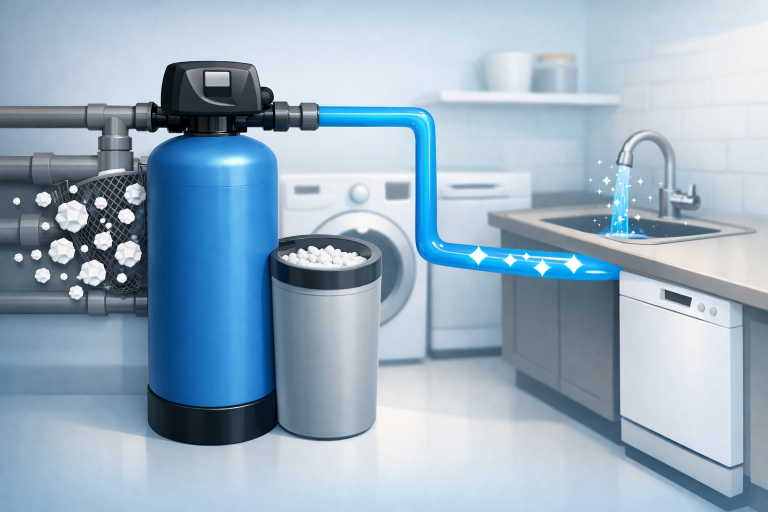
The system is built around a tank filled with resin beads that attract calcium and magnesium ions, exchanging them for sodium or potassium ions. The now-softened water continues through the household plumbing while hard minerals are flushed away during regeneration, typically using a salt-based brine solution. This cycle ensures the resin beads maintain their effectiveness over time.
The main advantage of ion exchange is its ability to provide a consistent supply of soft water. Some modern systems also monitor water usage and regenerate only as needed, conserving salt and water.
Benefits of Water Softening
- Extended Appliance Lifespan: Preventing mineral scale keeps heating elements, pipes, and components clean, reducing the need for major repairs.
- Enhanced Cleaning Efficiency: Soft water forms suds more easily, resulting in cleaner dishes, softer laundry, and less need for soaps and detergents. This not only conserves cleaning products but also contributes to more environmentally friendly housekeeping.
- Improved Skin and Hair Health: By removing hard minerals, the water becomes gentler on skin and hair. This helps maintain natural moisture, reducing dryness and irritation often caused by hard-water showers and baths.
Choosing the Right Water Softener
Choosing the right water softening system means considering household size, daily water usage, and the hardness level specific to your local area. Families with higher water consumption or particularly hard water may require larger-capacity systems to ensure optimal performance. Budget is also an important factor, as installation and ongoing maintenance costs vary depending on the unit type and features.
The U.S. Geological Survey offers helpful data and resources for testing home water quality and understanding local hardness levels.
Installation and Maintenance
Proper installation is critical for a water softener to function effectively. Most systems require a connection to both the main water line and a drain for the brine discharge. Once installed, softeners require consistent, simple maintenance. This includes checking salt levels, cleaning brine and resin tanks, and monitoring for signs of blockages or leaks. Many modern models feature digital reminders and diagnostics to simplify these tasks.
Routine servicing helps ensure your water softener operates at peak performance. Contractors can also provide annual inspections or assist with troubleshooting, which adds extra assurance if homeowners prefer not to handle all upkeep themselves.
Environmental Considerations
While water softening provides substantial household benefits, attention must be paid to environmental impacts. Some regions regulate the discharge of water softener salt to minimize the burden on water treatment plants.
Adhering to local guidelines and best practices can help balance personal benefits with ecological responsibility.
Conclusion
Incorporating a water softening system delivers significant advantages, from improved appliance efficiency and reduced cleaning effort to enhanced comfort in daily personal care.
