

Research and historical references for this article were gathered from multiple historical sources, including Wikipedia, and rewritten in a reader-friendly format for easier understanding.
- The colony of Maryland, a U.S. State was named in her honor.
- She Performed in Royal Plays. Many people considered it scandalous for a queen to appear publicly in performances.
- Some People Thought She Started the Civil War. Political enemies often blamed her influence over Charles I.
- She Was Raised in the French Royal Court. She grew up surrounded by intrigue, assassinations, and political drama long before becoming queen of England.
When people talk about the English Civil War, they often focus on kings, battles, and politics.
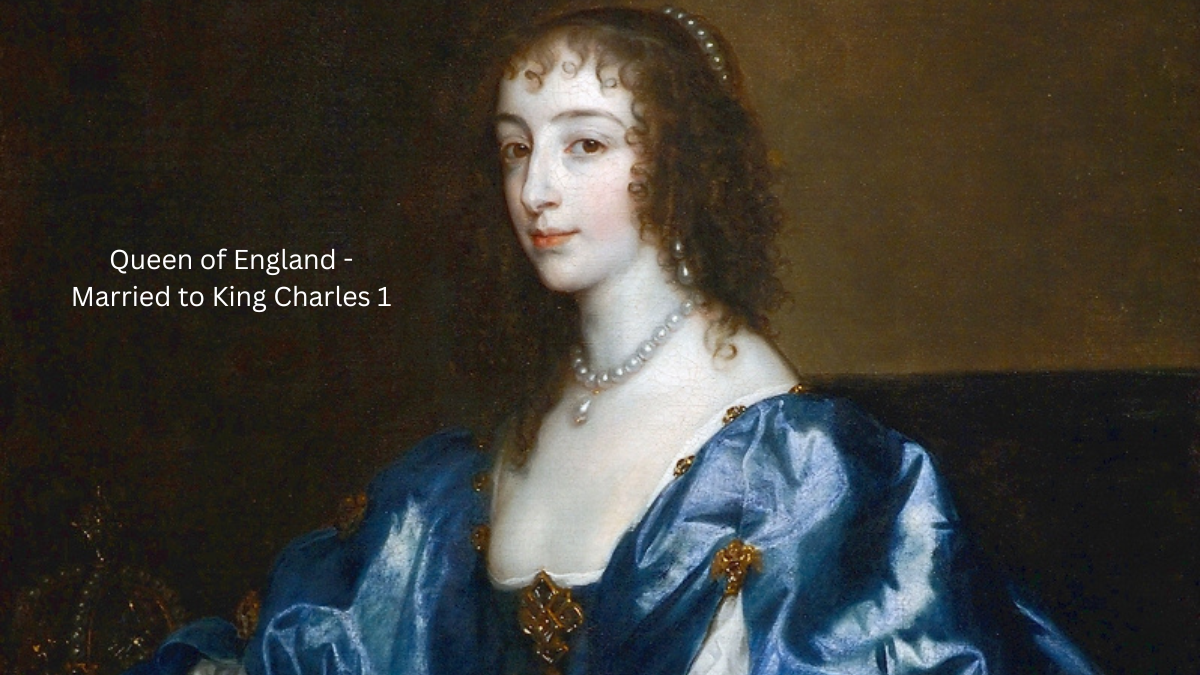
But behind King Charles I stood a powerful and deeply controversial woman: Queen Henrietta Maria.
She was glamorous, intelligent, fiercely loyal — and many people in England absolutely hated her.
Some blamed her for the Civil War itself.
A French Catholic Queen in Protestant England
Henrietta Maria arrived in England in 1625 after marrying King Charles I.
There was one huge problem immediately:
She was French.
She was Catholic.
And England deeply distrusted both.
At the time, many English Protestants feared Catholics were secretly trying to take control of the country again.
So when the new queen openly practiced Catholicism at court, suspicion exploded.
She Was Only 15 Years Old
One strange fact many readers do not realize:
Henrietta Maria was just 15 when she married Charles I.
She entered a foreign country, spoke limited English, and suddenly became queen of one of Europe’s most politically unstable kingdoms.
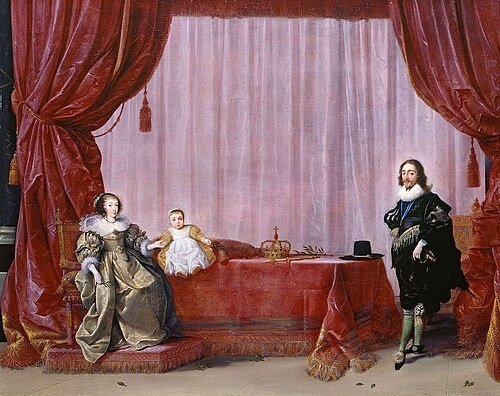
At First, Charles I Did Not Even Like Her
Their marriage started badly.
Charles’s favorite courtier, George Villiers, 1st Duke of Buckingham, treated Henrietta Maria poorly, creating tension between the couple.
For several years, the marriage was cold and uncomfortable.
But after Buckingham was assassinated in 1628, Charles and Henrietta Maria became extremely close.
This later made her one of the king’s most trusted political advisers.
Her Court Was Full of Drama, Art, and Scandal
Henrietta Maria transformed the royal court into something far more glamorous and theatrical than before.
She loved:
- plays
- dancing
- elaborate fashion
- masques (lavish royal performances)
- European-style art
The queen even acted in court performances herself — something many Puritans considered scandalous and immoral.
To critics, her court looked less like an English monarchy and more like a luxurious Catholic palace from continental Europe.
Many English People Blamed Her for “Corrupting” England
As tensions grew in the 1630s, many Protestants began seeing Henrietta Maria as dangerous.
Rumors spread that:
- she was secretly influencing government
- Catholics were gaining power
- England was drifting toward tyranny
Some people even believed she was part of a Catholic conspiracy against England.
Whether true or not, public anger toward her became intense.
She Built a Beautiful Catholic Chapel — and People Hated It
One of the biggest controversies came when Henrietta Maria built an elaborate Catholic chapel at Somerset House in London.
The chapel was richly decorated in European Catholic style.
To her supporters, it was elegant and sophisticated.
To many Protestants, it felt like proof that Catholic influence was returning to England.
Some Londoners even talked about destroying it.
She Helped Fund the Royalist War Effort
When civil war finally broke out in 1642, Henrietta Maria did something unusual for a queen:
She became politically active.
She traveled to the Netherlands to raise money, weapons, and support for Charles I.
According to many historians, her determination helped keep the Royalist cause alive during critical moments of the war.
She Never Saw Charles I Again
One of the saddest parts of her story is that Henrietta Maria and Charles I were separated during the war.
She fled to France in 1644 as the Royalist position collapsed.
Charles I was later captured and executed in 1649.
She never saw her husband again.
Historians Still Debate Her Legacy
For centuries, Henrietta Maria was portrayed as:
- manipulative
- foreign
- dangerous
- overly Catholic
But modern historians often view her more sympathetically.
Some now see her as:
- politically intelligent
- loyal to her husband
- unfairly blamed
- trapped inside religious conflicts she could not fully control
Even today, she remains one of the most controversial queens in British history.
